Animation (Discussion)
From Screenpedia
Jump to navigationJump to searchGroups 5 & 1
- What does this term mean in the context of cartooning: naturalism?
- Which filmmaker's cartoons were associated with naturalism? What technological and aesthetic techniques did he use to achieve this naturalism? What technological device did he use that is also used in A-ha's music video (view video)? (A digital version of the same device is used in Son of Zorn [2016].)
- How has cartooning balanced naturalism with abstraction?
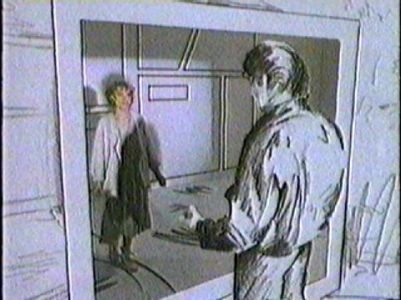
Screen shot from A-Ha's Take on Me.
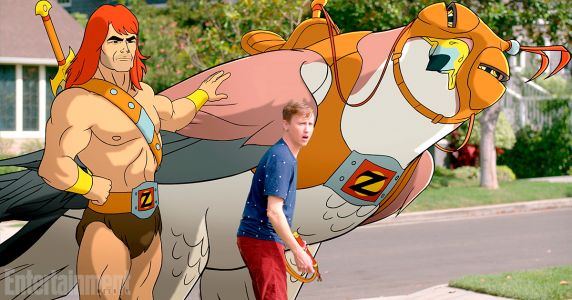
Screen shot from Son of Zorn.


Groups 6 & 2
- What does this term mean in the context of cartooning: abstraction?
- What studio was associated with (somewhat) abstract cartooning? What aesthetic techniques did it use to achieve this abstraction?
- How has cartooning balanced abstraction with naturalism?
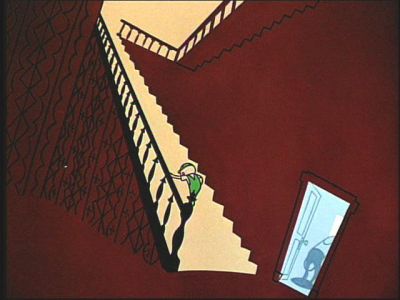
Screen shot from Gerald McBoing Boing. View video.

Screen shot from Bob's Burgers.


Group 3
- How do made-for-TV cartoons differ from made-for-movie-theater cartoons?
- What was the first made-for-TV animated cartoon? When?
- What aspects of made-for-TV cartoons does The Flintstones exemplify? (View video.)
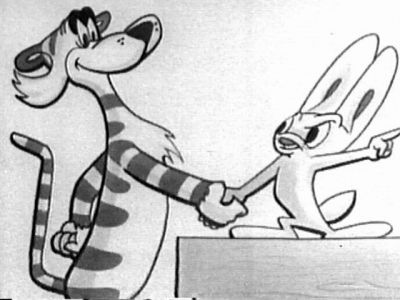
Screen shot from Crusader Rabbit. View video.

Group 4
- How does digital (CGI) animation differ from conventional cell animation? In particular:
- How is that difference part of the production process?
- How is that difference evident in how the animation looks?
- View Simpsons 3D animation. (Animation by Pacific Data Images.)[1]

Screenshot from The Simpsons.
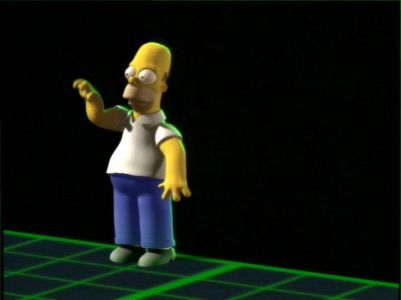
Screenshot from The Simpsons. Homer enters a new, strange dimension.


All Groups
- Describe the efficient mode of production that developed for cartoon production in the 1930s. What were its basic (1) technological and (2) economic characteristics? That is, how was cartoon production organized so that it could be profitable?
Bibliography
- Butler, Jeremy G. Television: Critical Methods and Applications. Third edition. NY: Routledge, 2011.
External links
- Animation illustrations
- Wikipedia article on "Homer3".
- Jason Koebler, "The Team That Brought Homer Simpson into the Third Dimension," Vice, May 6 2015, https://www.vice.com/en_us/article/3dkwgb/the-team-that-brought-homer-simpson-into-the-third-dimension

