Difference between revisions of "BUI301F2022/Narrative Structure"
From Screenpedia
Jump to navigationJump to search (created) |
|||
| (2 intermediate revisions by the same user not shown) | |||
| Line 14: | Line 14: | ||
#Climax | #Climax | ||
#Resolution | #Resolution | ||
| + | |||
| + | ==The television series== | ||
| + | |||
| + | <gallery mode="packed" heights=600px> | ||
| + | File:Fig03-12 TV Series Narrative Structure - rendered.jpg|alt=Diagram of series-TV narrative structure.|''Television'' Figure 3.12 Linear-TV series' narrative structure must accommodate commercial interruptions and allow for a repeatable narrative problematic. | ||
| + | </gallery> | ||
| + | |||
| + | Break down the "The Vartabedian Conundrum" episode from ''The Big Bang Theory'' (December 8, 2008). Number each scene and provide a ''brief'' description of it. | ||
| + | *How many scenes does it have? | ||
| + | |||
| + | Does the episode contain the conventional elements of a TV series? What are the key differences between its narrative structure and that of a classical film? | ||
| + | #Multiple protagonists | ||
| + | #*It may help to refer to other episodes in the program, if you've seen them. | ||
| + | #Exposition | ||
| + | #Motivation | ||
| + | #Narrative problematic | ||
| + | #Cause-effect chain | ||
| + | #Climax | ||
| + | #Resolution? | ||
| + | |||
| + | ===Media discourse=== | ||
| + | |||
| + | #What are the different discourses or worldviews shown in ''TBBT''? How would you describe its polysemy? | ||
| + | #*What values does it attach to professors/engineers? | ||
| + | #*Are there gender stereotypes at play? | ||
| + | #**How do the young women we've seen compare/contrast in terms of gender roles and their relationships with the shows' men? | ||
| + | #***Penny and Stephanie (''Big Bang'') | ||
| + | #Is there a final meaning (a "message" or "moral") that the show presents to the viewer? | ||
| + | #*Do you agree with it? | ||
[[Category:BUI301F2022]] | [[Category:BUI301F2022]] | ||
[[Category:BUI301F2022 Discussion]] | [[Category:BUI301F2022 Discussion]] | ||
Latest revision as of 16:05, 24 August 2022
Classical Hollywood cinema
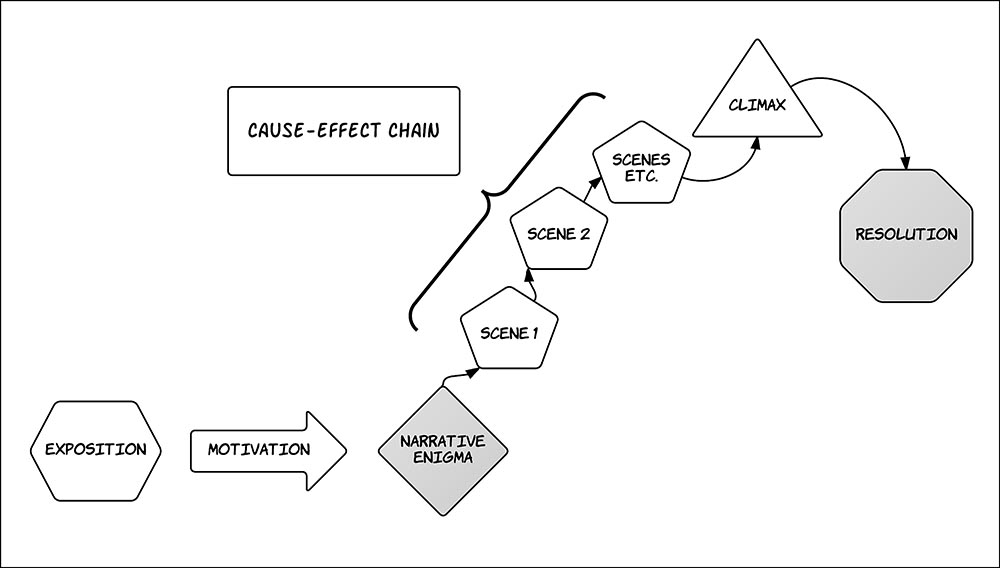
Television Figure 3.6 The rise and fall of the narrative action in classical film.

Does Always Be My Maybe fit the classical implementation of:
- Single protagonist
- Exposition
- Motivation
- Narrative enigma
- Cause-effect chain
- Story time versus screen time--in terms of duration and order
- Climax
- Resolution
The television series
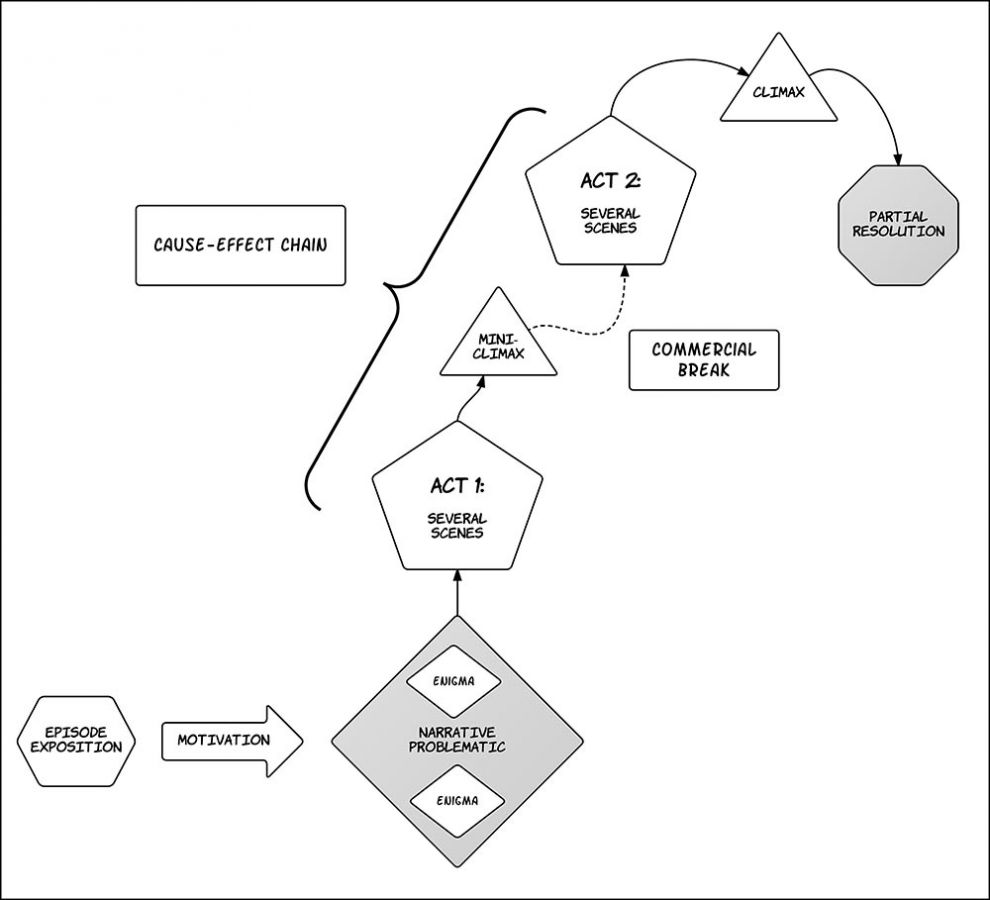
Television Figure 3.12 Linear-TV series' narrative structure must accommodate commercial interruptions and allow for a repeatable narrative problematic.

Break down the "The Vartabedian Conundrum" episode from The Big Bang Theory (December 8, 2008). Number each scene and provide a brief description of it.
- How many scenes does it have?
Does the episode contain the conventional elements of a TV series? What are the key differences between its narrative structure and that of a classical film?
- Multiple protagonists
- It may help to refer to other episodes in the program, if you've seen them.
- Exposition
- Motivation
- Narrative problematic
- Cause-effect chain
- Climax
- Resolution?
Media discourse
- What are the different discourses or worldviews shown in TBBT? How would you describe its polysemy?
- What values does it attach to professors/engineers?
- Are there gender stereotypes at play?
- How do the young women we've seen compare/contrast in terms of gender roles and their relationships with the shows' men?
- Penny and Stephanie (Big Bang)
- How do the young women we've seen compare/contrast in terms of gender roles and their relationships with the shows' men?
- Is there a final meaning (a "message" or "moral") that the show presents to the viewer?
- Do you agree with it?

